Plan components before recipes
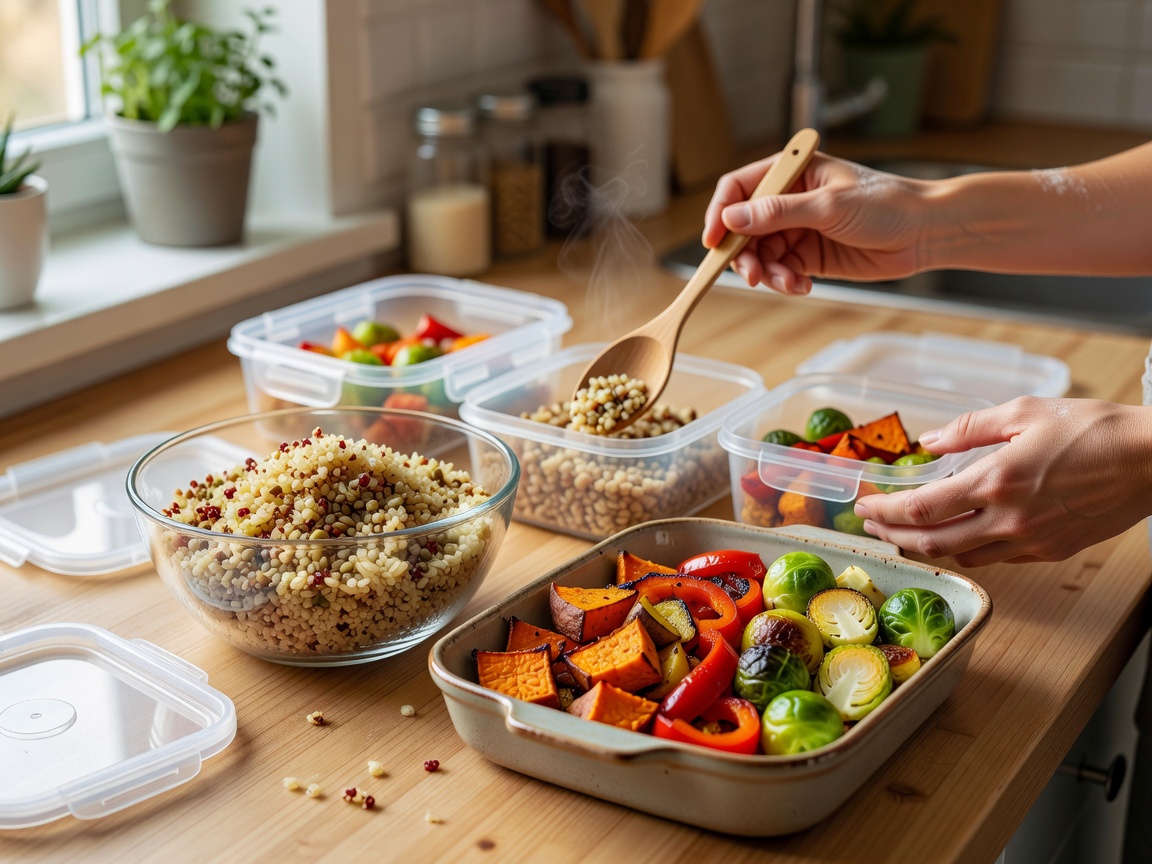
Instead of assigning seven named dinners, choose a few components that can travel. Cook a grain such as rice, barley or couscous. Prepare a tray of vegetables. Have a protein ready: lentil soup, eggs, roasted chicken, tofu, beans or fish for the day it is bought. Add sauces or flavour bases that change the result without changing the workload.
Those components can become a grain bowl, a soup with toast, a stir-fry, a stuffed wrap or a simple plate. This is particularly useful when household schedules differ. One person can add beans and salsa; another can add chicken and yoghurt. The shared base is doing the administrative work.
Give every plan an emergency lane
Keep a few genuinely quick meals in reserve: eggs on toast with tomatoes, tinned beans on a jacket potato, frozen vegetables with noodles and tofu, or yoghurt with oats and fruit. The emergency lane prevents takeaway from becoming the only answer to a late finish. It does not ban takeaway; it simply restores a choice.
Frozen vegetables, tinned pulses and portioned leftovers are central here. Label leftovers with what they are and when they were made, then follow food-safety guidance on cooling, storing and reheating. When in doubt, use official Food Standards Agency advice rather than relying on folklore from a family group chat.
Repeat breakfasts and lunches on purpose
Variety is valuable across a diet, but every meal does not need a new concept. Repeating a breakfast or lunch that you like can reduce shopping decisions and make appetite easier to understand. Porridge with fruit and yoghurt, eggs on wholemeal toast, a bean-based soup, or leftover grain bowls are all adaptable starting points.
Shop to a short structure
A practical list might include vegetables, fruit, two or three protein options, carbohydrate staples, breakfast foods and flavours. Buy quantities based on how often you cook, not on the enthusiasm of the list-writing moment. Perishable ingredients can be placed early in the week, while freezer and cupboard meals cover later days.
Review the friction, not your character
If a plan repeatedly fails, locate the awkward point. Perhaps chopping after work is the problem, so buy frozen chopped vegetables. Perhaps lunch is too small and afternoon snacking follows, so add a protein food and carbohydrate. Perhaps recipes have too many ingredients. The repair is usually practical.
Meal planning cannot account for every health need. If you have diabetes, kidney disease, digestive conditions, pregnancy or a history of disordered eating, seek individual guidance from a qualified clinician or registered dietitian before making major changes.