Protein is a category, not a personality
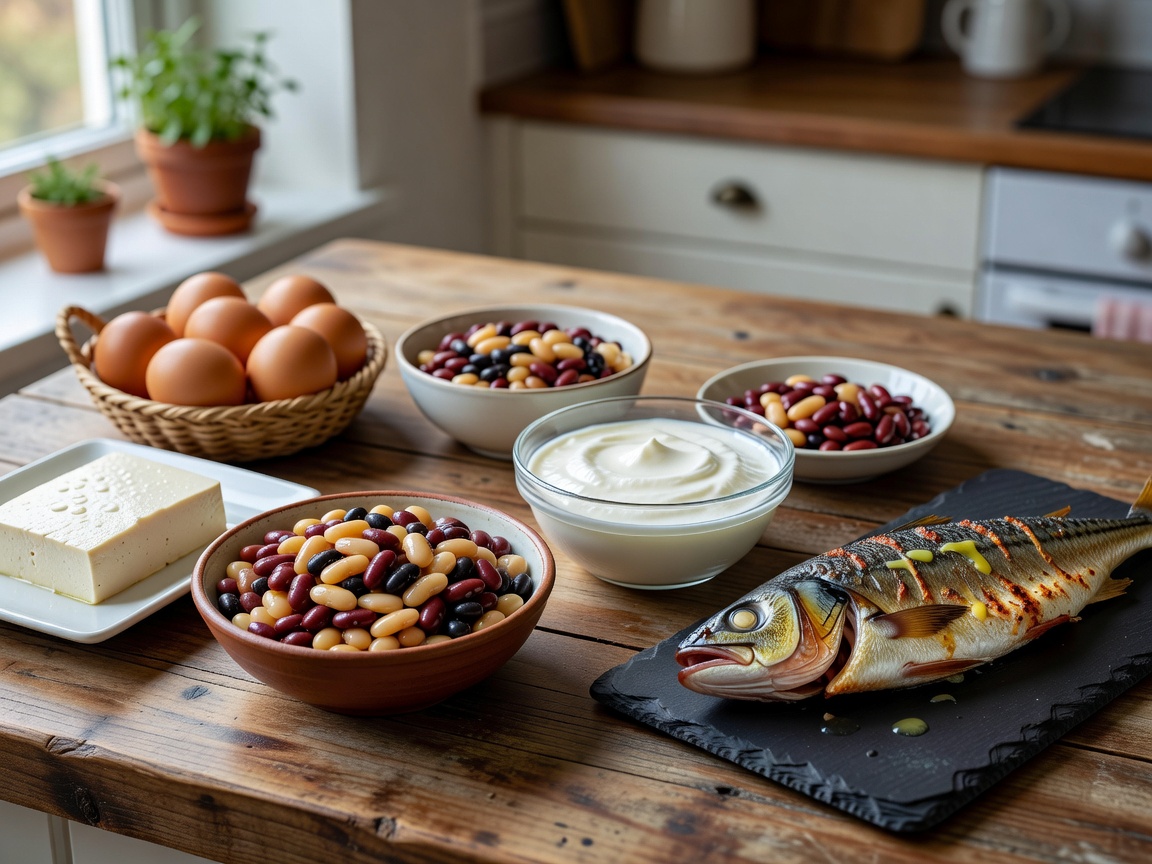
Eggs, dairy foods, fish, poultry, meat, tofu, tempeh, beans, lentils, peas, nuts and seeds can all contribute protein. They differ in flavour, cost, fibre, fat, preparation and how well they suit a particular dish. The useful question is not which source wins in the abstract. It is whether it helps create a satisfying meal you can make again.
Pulses bring protein and fibre, and they take on strong flavours well. Eggs are quick and versatile. Plain yoghurt can be breakfast, a sauce base or a topping. Tofu is especially adaptable in stir-fries, curries and tray bakes. Fish and poultry may fit meals where a more distinct centre is wanted. Leaner cuts of meat can be part of a varied pattern, while beans and lentils offer a lower-cost route on many days.
Match the source to the cooking method
For a fast lunch, tinned beans with chopped vegetables and a sharp dressing may be more realistic than cooking dried pulses. For a tray bake, chickpeas, tofu, salmon or chicken can roast beside vegetables. For a thick soup, red lentils disappear agreeably into the broth. For breakfast, eggs, Greek-style yoghurt, milk, soy yoghurt or beans on toast each make a different kind of sense.
Cooking method matters because added fat can change a meal quickly. Roasting, grilling, baking, poaching, steaming and stir-frying with a measured amount of oil are often easier to manage than deep frying. That is a practical distinction, not a moral ranking of foods.
Build the rest of the plate around it
A protein portion alone is rarely the whole answer. Add vegetables or fruit, and include carbohydrate foods such as potatoes, rice, bread, pasta, oats or grains according to appetite and activity. Carbohydrates are not an administrative error. They supply energy and make meals enjoyable; choosing higher-fibre forms often helps with staying power.
Consider the quieter trade-offs
Plant proteins often benefit from a range of foods across the day rather than pressure on a single “perfect” meal. Those avoiding animal foods should pay particular attention to vitamin B12 and may need professional guidance on supplements. Some fish choices raise questions about sustainability, and official UK guidance is a better place for current advice than a generic food rule.
Processed meats are best treated as occasional rather than routine foods. For everyone else, the larger pattern still matters: vegetables, fibre-rich foods, regular meals and preparation habits can do more work than chasing a supposedly superior protein source.
Keep it enjoyable enough to repeat
Season boldly: cumin and smoked paprika for beans, ginger and soy for tofu, lemon and herbs for fish, yoghurt and spices for chicken. A lean diet from home should taste like dinner, not like a punishment with a lid. If appetite, medical needs or training goals are a concern, ask a registered dietitian for personal advice.