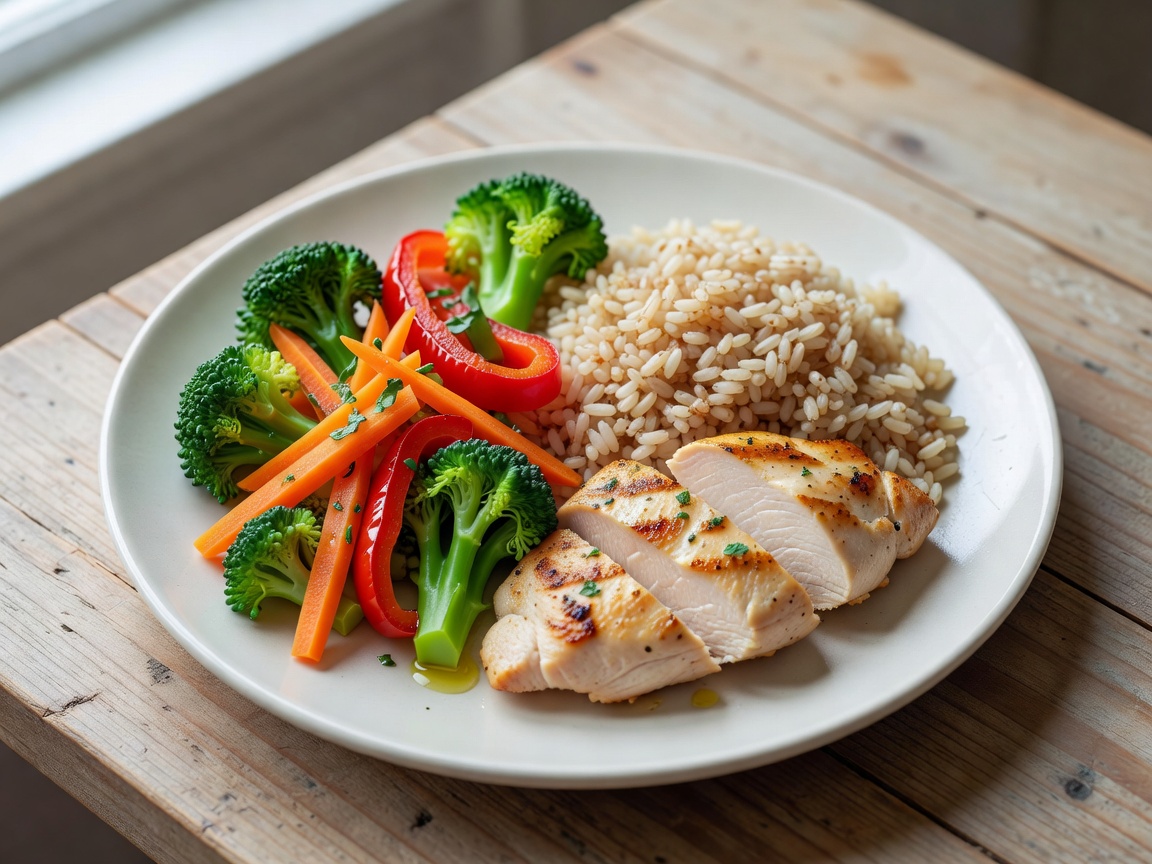
Begin with the shape of the meal
A visual plate approach can be more durable than a rigid set of measurements. Start by giving vegetables and salad a substantial place, add a protein food, then include a carbohydrate food that suits your appetite and plans. Add fats for flavour and satisfaction: oil in cooking, nuts, seeds, avocado, cheese or a dressing can all belong here.
This is deliberately broad. A soup, sandwich, curry or pasta bowl does not divide into tidy compartments, and nobody needs to pretend otherwise. The idea is to notice whether one element has crowded out the others over time.
Use the tools already in the kitchen
Bowls, plates, ladles and serving spoons quietly shape portions. If a large bowl encourages an amount that leaves you uncomfortable, try serving from the kitchen onto a smaller bowl or plate, then pause before deciding on more. This is a design choice, not a test of discipline.
When energy-dense ingredients are involved, measuring can be useful for learning. Oils, nut butters, cheese, dressings and snack foods are easy to add without noticing. A spoon or small dish makes the amount visible. Once familiar, many people can use that sense of scale without turning dinner into accountancy.
Slow down the first serving
Serve a reasonable first plate and eat without standing at the worktop if possible. Check in partway through: are you still hungry, are you enjoying this, and would more of the same actually help? Hunger changes with sleep, activity, stress and illness, so a fixed portion cannot answer every day.
Consider drinks and eating patterns
Sweet drinks, alcohol and large café-style beverages can be easy to overlook because they are not plated. Water, tea, coffee and lower-sugar drinks may fit more easily into daily routines, while alcohol is best considered carefully for both health and energy intake. NHS guidance is a sensible source for current UK alcohol information.
Regular meals can make hunger more predictable for some people. Others prefer a different rhythm. What matters is whether long gaps lead to rushed choices that feel out of control. A planned snack of fruit with yoghurt, toast with beans, or nuts with fruit may be more useful than white-knuckling until dinner.
Keep the goal proportionate
Portion awareness should support eating, not make it frightening. If food rules, guilt, bingeing or restriction are taking up too much space, speak to a GP or an eating-disorder specialist. Individual nutritional needs are personal; a registered dietitian can help translate broad principles into something safe and realistic.