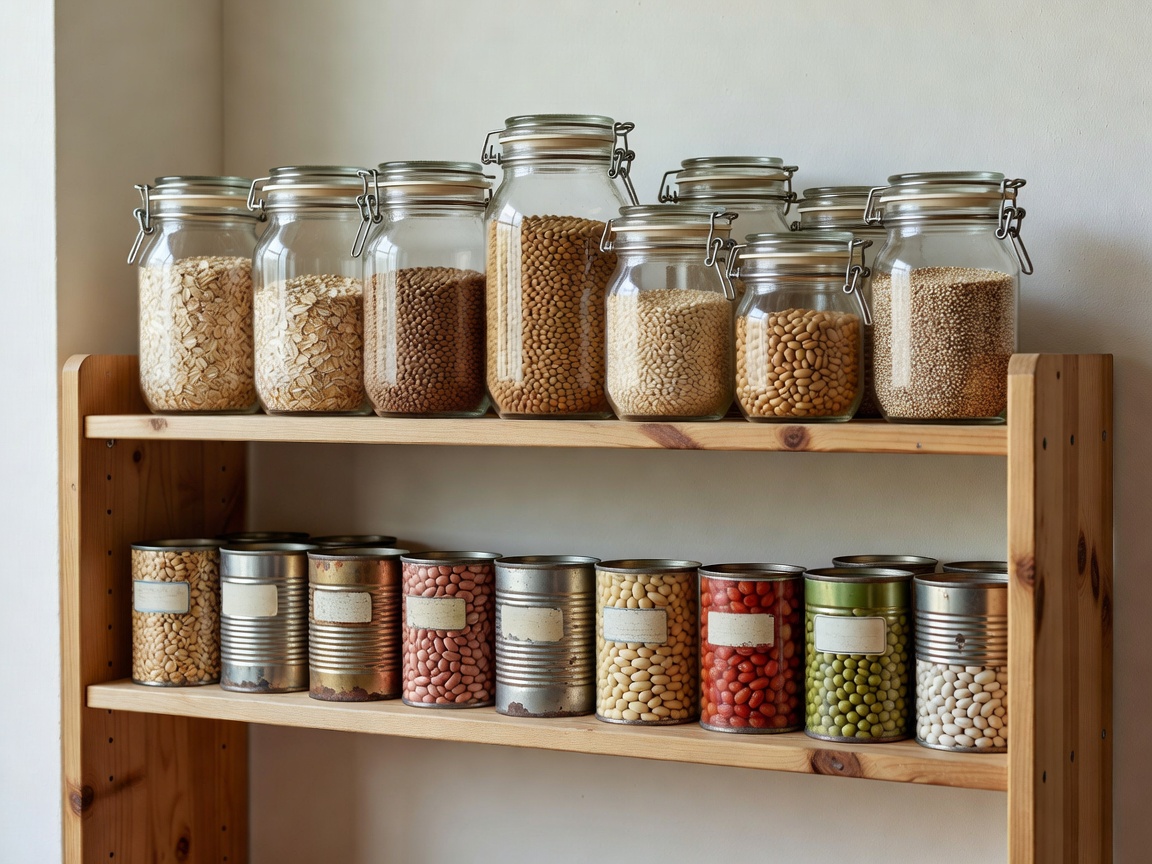
Start with ingredients that do more than one job
A home pantry works best when the same ingredient fits several meals. Oats can become porridge, overnight oats or a topping for fruit. Tinned chickpeas work in a tomato stew, a salad, a mashed filling or a tray bake. Dried lentils cook into soups and sauces; split red lentils are particularly useful when you want body in a meal without a long simmer.
Choose wholegrain staples when you enjoy them: brown rice, wholewheat pasta, barley, bulgur wheat and wholemeal bread all bring different textures. None needs to appear at every meal. White rice or regular pasta can still sit in a balanced plate, especially when vegetables and protein carry the bulk of the dish.
Keep vegetables in more than one form
Fresh produce is excellent, but a lean home diet should not collapse when the salad leaves have had an unfortunate week. Frozen peas, spinach, mixed vegetables and berries are practical staples. Tinned tomatoes, sweetcorn and beans are similarly useful. Look for versions without added sugar where that matters to the recipe, and rinse tinned beans if you prefer to reduce the salty canning liquid.
Build flavour from onions, garlic, herbs, spices, vinegar, lemons, mustard and chilli rather than assuming that a lighter meal must taste apologetic. Olive oil, rapeseed oil, tahini, nuts and seeds are valuable foods too; their energy density simply makes measured use more helpful than a free-pour.
Give protein a permanent shelf
Tinned fish, beans, lentils, peanut butter, nuts and seeds can bridge the gap between shops. For the fridge or freezer, eggs, plain yoghurt, tofu, chicken, fish or meat you enjoy cooking can provide the same convenience. The point is availability. A bowl of grains and vegetables becomes more sustaining when a protein source is already close by.
Make the cupboard visible
Put everyday foods at eye level and decant only when it helps you recognise what you have. A quick list on the fridge can prevent duplicate purchases and reveal what needs using. Group ingredients by use: breakfast basics, quick proteins, grains, flavourings and emergency vegetables. This is less glamorous than a colour-coded pantry, which is fortunate because it is also more robust.
Shop by gaps, not by a perfect list
Before shopping, identify a grain, a protein and vegetables for a few meals. Then add fruit, breakfast food and one or two flavours that make those meals appealing. This leaves room for seasonality and preference without demanding a new recipe every night. A lean diet from home is easier to maintain when its ingredients are familiar enough to be assembled without instructions.
If cost, allergies, cultural foods or medical needs shape your choices, adapt the categories rather than abandoning the idea. A qualified dietitian can help turn individual restrictions into a workable food plan.